
written by Kim Matheson

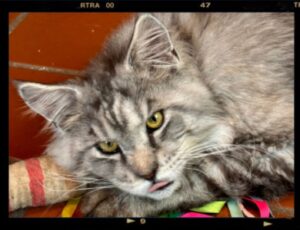
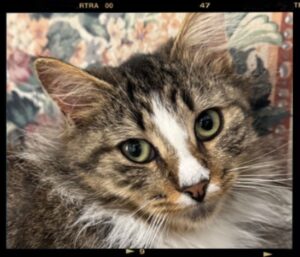
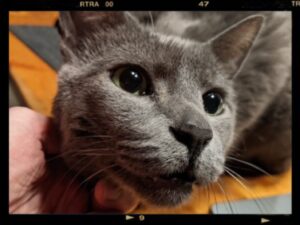
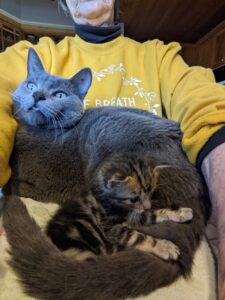
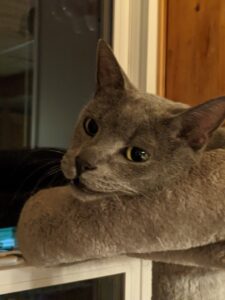
Keanu is a gangly long-legged blue-grey senior who has epilepsy that causes prolonged (some up to 30 mins) focal seizures affecting his head and limbs. He also has gastrointestinal issues. Together, this means he’s getting meds 4X a day.
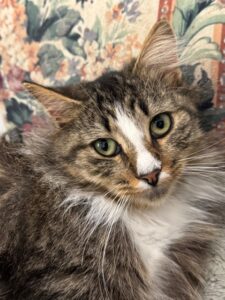
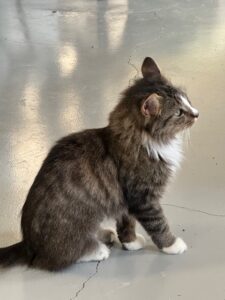
Samson arrived with an extremely painful oral condition called stomatitis. In effect, he was allergic to the bacteria in his mouth, causing severe inflammation of the gums. Despite being relatively young, the only treatment was the removal of all of his teeth.
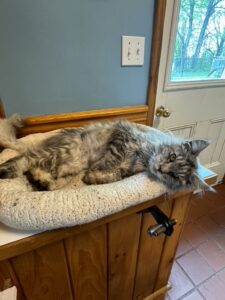
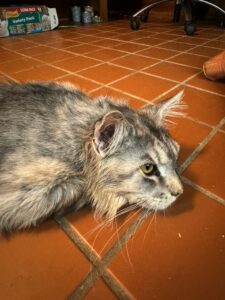
Liberty was found after falling off someone’s roof, probably because her balance was impaired due to a massive polyp in her ear that was blocking the canal and creating fluid build-up and leakage. The polyp was surgically removed, with several pre- and post-surgical medications in hopes that new polyps won’t form.
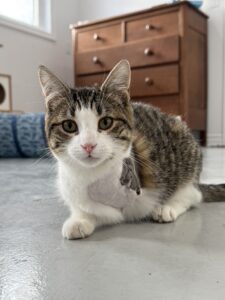
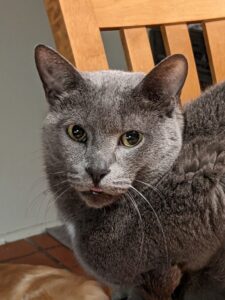
Grace had a torn radial nerve which meant she had no control or sensation of her front leg. It was possibly caused by her leg getting stuck in a fence. Amputation was the only option.
All of these are rescued cats who have much cause to be wary of humans who let them down, abandoning them outdoors to survive on their own rather than addressing their health issues.
Once rescued, they had so many additional reasons to avoid contact with their caregivers, given the need for pills, treatment interventions, and drastic surgery. Far from avoiding their caregivers, each showed signs of gratitude – seeking affection and enjoying life to the fullest.
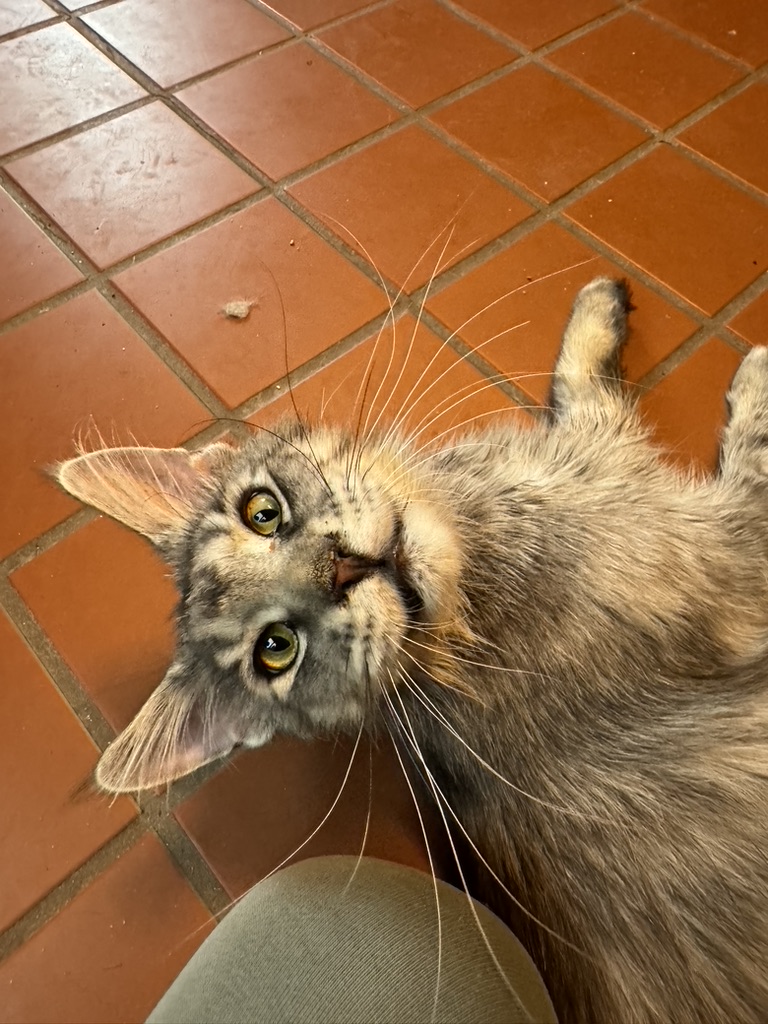
Samson
“Ok, not feeling great here. But if you want to grab me a can of that wet stuff, I’m sure I’ll feel a bit better. Then maybe we can have a good talk about life. I think we need to find a way of being a little less serious and having a lot more fun around here.”
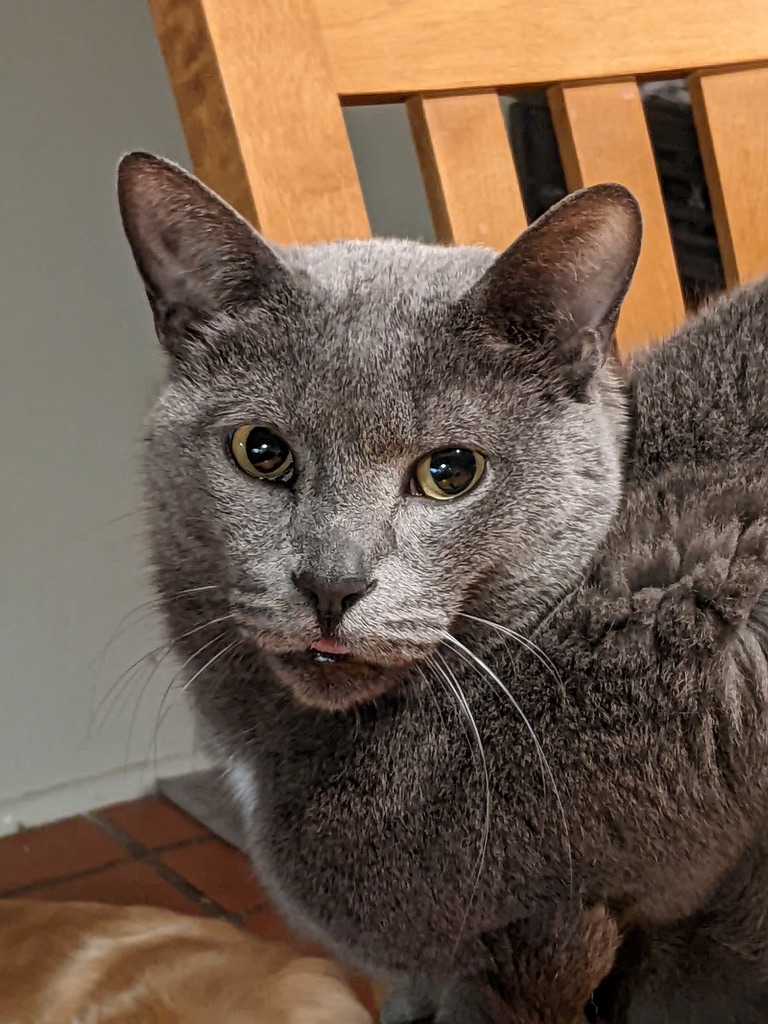
Keanu
“Hey where are you going? Oh, you have to go in there? I’m coming, I’m coming. Can you turn the tap on for me? Really! That spit thing you do is gross. But I love you anyway. Want to sit with me for a while now?”
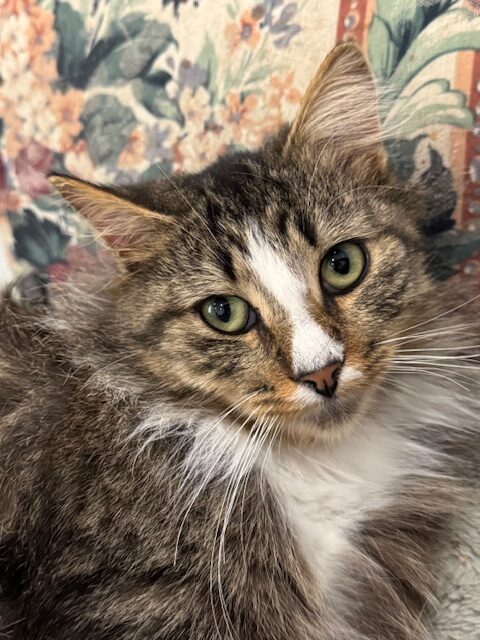
Liberty
“You need to work? Well then. I’ll just crawl on top of that machine you have that’s taking up my lap space. You see how helpful I can be! Feel better now? Here, let me snuggle your chin. Kiss kiss!”
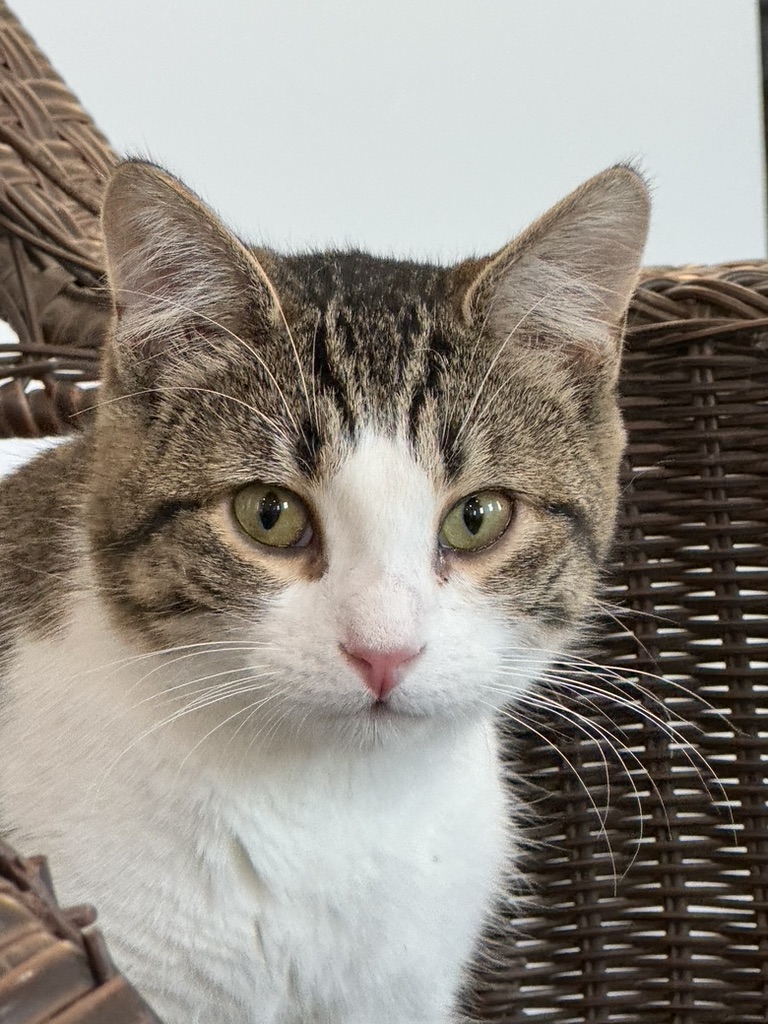
Grace
“OMG see me run. I’m free. No useless limb to hold me back! I’m in love with the world. Come race with me. Come share life with me!”
The Science of Gratitude
“Mind your please and thank-yous” is ingrained into us early in life. But this isn’t just a matter of politeness. When genuinely felt, gratitude has been found to reduce stress and promote neural sensitivity to social rewards.
Focusing on what we are grateful for (rather than what is annoying us) improves our mood, is associated with healthier lifestyle behaviours, and reduces symptoms of physical illness. Expressing gratitude is often reciprocated through shows of affection, greater loyalty and protectiveness, thereby increasing social bonding even across species.
It is no wonder that animals might instinctively lean toward gratitude when they assess their situation as safe and realize they are in caring hands… even when the meds don’t go down so well.

Allen, S. (2018). The science of gratitude. John Templeton Foundation. https://ggsc.berkeley.edu/images/uploads/GGSC-JTF_White_Paper-Gratitude-FINAL.pdf
Bono, G., & Sender, J. T. (2018). How gratitude connects humans to the best in themselves and in others. Research in Human Development, 15(3-4), 224-237.