
Fear: Freeze, Fight or Flight

written by Kim Matheson
Putting myself in the ‘paws’ of a cat expressing fear is challenging. So small, finding their way in the uncertainties of the world around them can elicit unique anxieties. Just as with any species, which response is most likely to maximize survival is equally uncertain.
In rescue, we are bound to see many frightened cats.
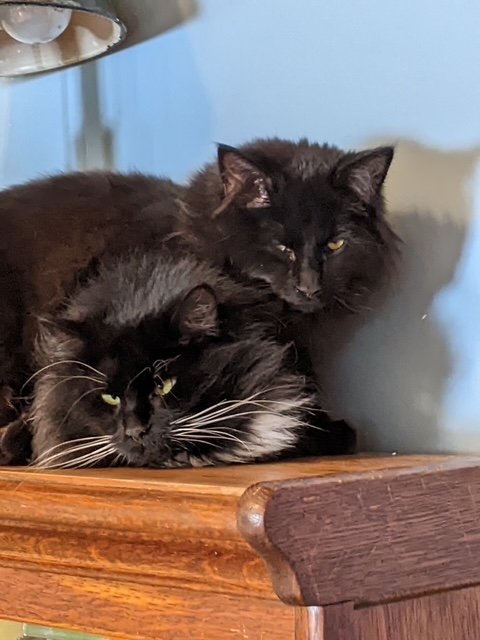
Circe brought her kittens to safety in a horse barn. And she was right, as they were all warm, fed, and eventually placed in forever homes. But Circe remained wary, especially when she and her kittens were trapped and brought into the confines of a strange house. While flight would certainly have been her choice of response, she resorted to freeze. Sadly, several who misread her ‘willingness’ to be petted probably contributed to her lifelong determination to not be touched, even as she kept herself in close company with humans.
Hobbes experienced trauma as a kitten due to a little girl who thought he was a toy to be thrown. He seemed remarkably forgiving when he was removed from that environment to a quieter loving place. Unfortunately Hobbes was adopted into a home that was loving but chaotic, presenting cues that triggered his early life terrors. Hobbes began to attack others in ways that his new family was unable to predict. Once surrendered back to a quiet, safe routine, Hobbes was able to manage his inexplicable fright, and express his love and gratitude all over again.
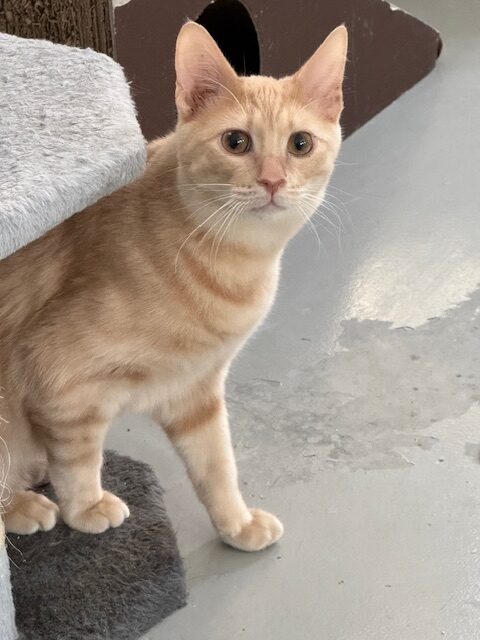
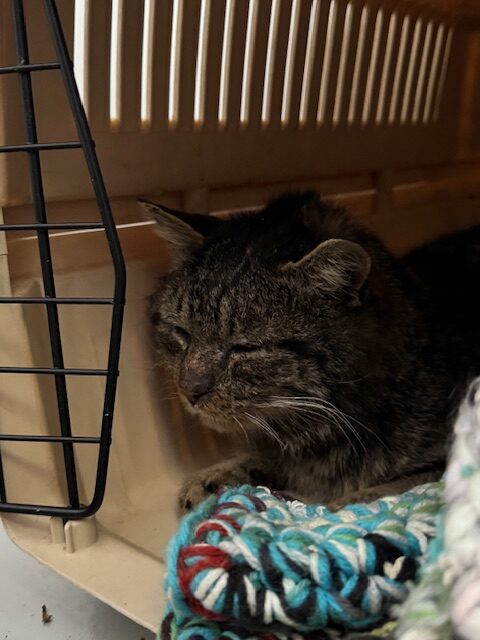
Morgan spent over 10 years outdoors as a stray cat. But his community feeder was no longer able to provide him with the basics to survive outdoors. By this time, Morgan’s sight and hearing were considerably diminished, and he spent much time curled in a ball inside of a box hiding from the threats that he could no longer see or hear coming. Morgan panics when removed from this safe box, running himself in circles of confusion and terror.
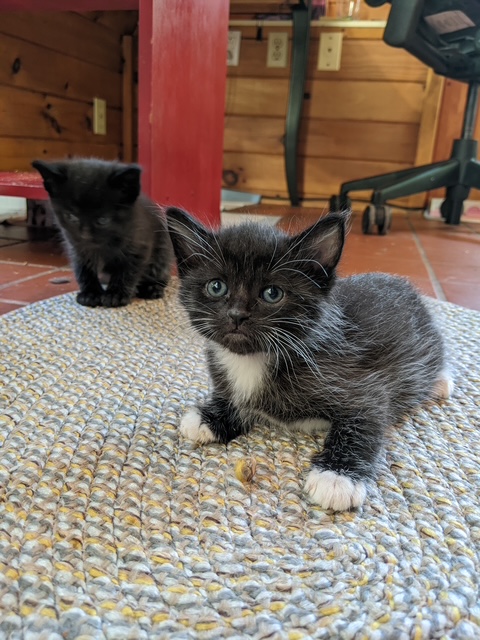
Olivia was a healthy kitten who, together with her siblings, was cared for outdoors by her mom, who had no trust in humans. Whenever mom was approached, her fear response was to lash out until the danger backed down. Olivia learned to do the same, and so even as a kitten, her learned fear held her back from being able to connect to others.
When we empathize with animals, we realize that their lashing out or withdrawing is often rooted in fear. Most of us can understand the withdrawal reaction, as many humans feel social anxiety, fear of the unknown, fear of harm, existential fear, and our most common reaction is withdrawal – flight or freeze.
However, aggression among humans is more commonly linked to anger than fear, and so we are prone to misinterpreting the basis for aggression among non-human animals. Anger among animals typically occurs when they’re threatened, provoked or defending themselves, their young, or their territory. It is generally tied to a particular stimulus, which, when removed results in the aggression dissipating.
Humans in contrast can harbour anger sometimes for a very long time, and sometimes toward a broad range of stimuli stemming from jealousy, unresolved negative emotions, resentment, hate, and even self-hate. Anger might be tied to perceptions of injustice, feelings of betrayal, and unmet expectations. Many of these cognitions are less evident among animals who behave more instinctively and are motivated by situational self-preservation. And so our labelling of aggression as anger may be erroneous and likely to result in tactics that exacerbate rather than diminish the situation. When we understand the motivations of animal aggression, this can make all the difference in how we react to respect their response and look for ways to make them feel safe.
The Science of Fear
Humans and non-human animals alike are instinctually wired to respond to threats with fear or aggression – it is a matter of survival. Both experience heightened vigilance and environmental assessment; both experience negative emotional surges; both demonstrate biological responses including elevated heart rates and rapid breathing, shivering or trembling, stemming from a surge of stress hormones such as cortisol and adrenaline. Both also act in similar ways at a high level in terms of freeze, flight, or fight.
While instinctual, there are also responses that are learned as a result of experience, including socialization (as with Olivia) and traumatic experiences (like Hobbes). The cognitive and emotional spillovers to ‘triggers’ are also evident, although they may be more complex among humans to reflect abstract and moral judgements. When fear reactions become chronic, they contribute to mental health challenges – in humans, we talk about them in terms of anxiety disorders, posttraumatic stress disorder, depression, and so on. In human and non-human animals, alleviating the negative impacts of chronic fear will depend on making changes early on and the individual coping strategies to diminish the actual or perceived threat.
Powell, L., Watson, B., & Serpell, J. (2023). Understanding feline feelings: An investigation of cat owners’ perceptions of problematic cat behaviors. Applied Animal Behaviour Science, 266, 106025. https://www.sciencedirect.com/science/article/abs/pii/S0168159123001971
Johnson-Bennett, P. (2020). Cat vs. cat: Keeping the peace when you have more than one cat. Penguin Books.