
Horses and I
written by Malgosia Mosielki
Billy and Leo
How Horses Help With Human Health
Horses are prey animals, which means they are inherently aware of their surroundings and have developed extraordinary skills to read body language and energy. This ability to stay alert and communicate non-verbally is part of what makes them such powerful companions in mental health therapy. When you spend time with a horse, they pick up on your emotions, your energy, and even the smallest movements in your body. This deep sensitivity allows them to mirror your feelings, offering a kind of reflection that can be incredibly helpful for emotional healing.
Studies have shown that horses can perceive human emotions like joy, anger, and sadness. This ability to “hold space” for a person’s feelings without judgment makes them exceptional partners in therapy. Whether you’re dealing with anxiety, depression, or trauma, the horse’s response to your emotional state helps create a safe environment for processing complex feelings. In my own life, I’ve always felt that same sense of calm when in the presence of horses—a non-judgmental space where I could just “be.”
“We have almost forgotten how strange a thing it is that so huge and powerful and intelligent an animal as a horse should allow another, and far more feeble animal, to ride upon its back.”
– Peter Gray
My Professional Background With Horses
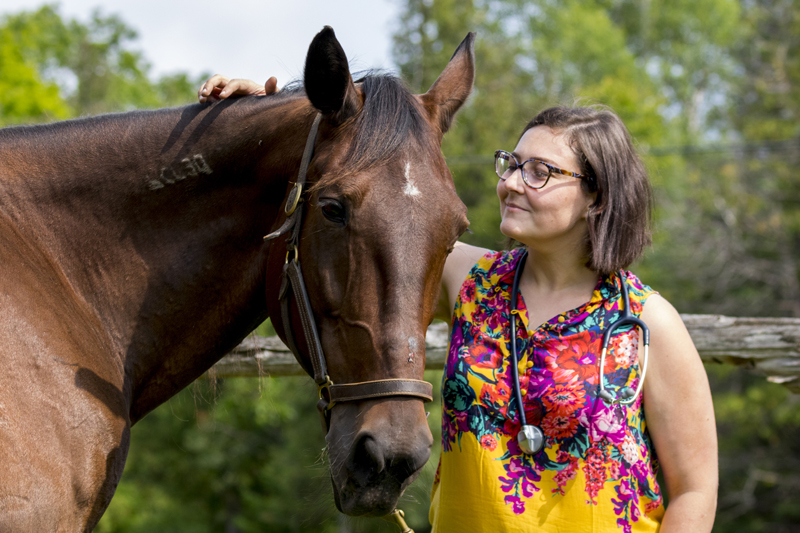
As a young person, I always knew I wanted to be a veterinarian. When I discovered my love for horses, it was a natural progression to focus on them within my veterinary career. However, my experiences working within the horse industry revealed a stark reality—one that steered me away from traditional veterinary work with horses.
During my summers in veterinary school, I had the opportunity to visit several well-known clinics in Florida, Kentucky, and California, observing how horses were treated in various settings. What I found deeply troubled. Many horse owners and guardians didn’t seem to care much about the well-being of their animals. Instead, horses were often seen as tools—sources of income or symbols of prestige. The medical decisions made were not always in the best interest of the horses, but were often driven by what was most beneficial to the owner.
This disconnection between horse welfare and their owners’ priorities left me feeling both disheartened and angry. I realized that I could not align myself with an industry where horses were treated as commodities and not as sentient beings deserving of compassion and respect. It was then that I decided to veer away from the traditional horse industry, choosing instead to focus on rescue work and advocacy.
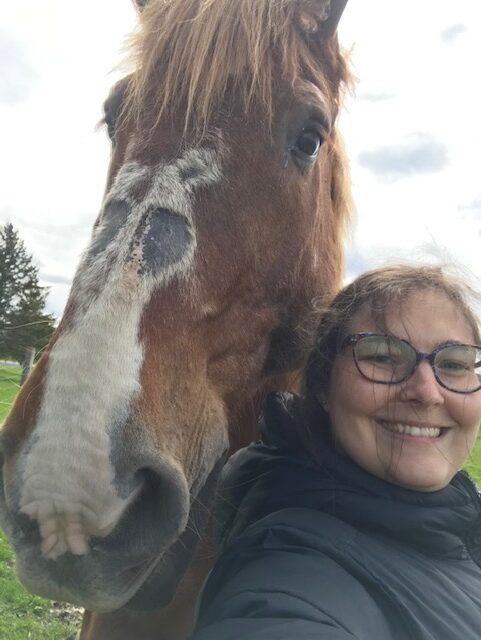
Billy and Malgosia
How I Came To Have Five Rescue Horses
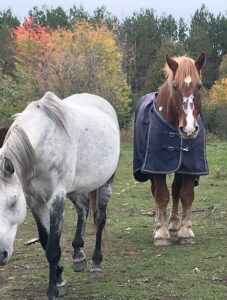
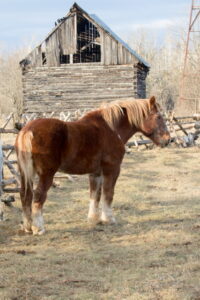
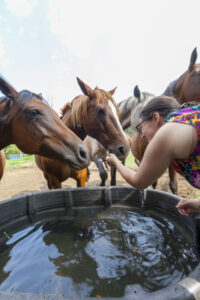
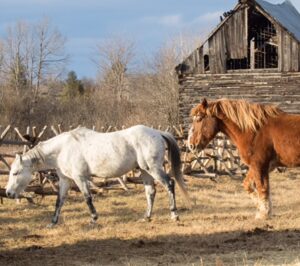
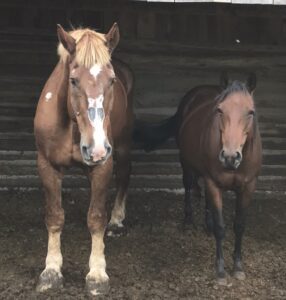
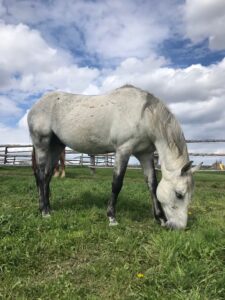
My journey toward rescuing horses began while I was running a mobile veterinary practice that serviced both small animals and horses. My first two rescue horses came through my work in the field—Leo and Taz (link to their stories), both of whom had been through challenging circumstances. Their stories made it clear that this was the path I needed to pursue.
Later, through word of mouth, I came to adopt three more horses, each with their own story of hardship. I didn’t plan on having five rescue horses, but once I was able to help, I knew I couldn’t turn my back on them. These horses, each with their unique past, have become a significant part of my life, and I consider it a privilege to provide them with the love, care, and respect they deserve.
Why Are Horses So At Risk? The Growing Crisis
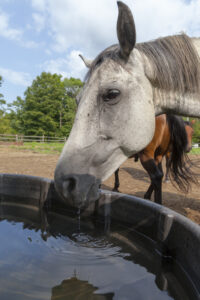
Horses are at risk for a variety of reasons, and it’s a problem that is only getting worse. One of the main issues is the alarming number of horses sent to slaughter in Canada. In 2007 the US shut down their equine slaughterhouses.
While I do not agree with equine slaughter, this move was not paired with government or industry-funded solutions for the retirement and/or humane euthanasia of these horses. As such, the closure only shifted the problem of unwanted American horses across the borders to Canada and Mexico.
Another major issue is simply the cost of housing, feeding, and caring for these animals. Many horse owners justify the high cost while the animals are “useful” to them (i.e. they can be used for riding or entertainment), but once the horse is injured or too old to use, they often send these horses to auction, which are essentially a pipeline to slaughter. Relatively few horse owners/guardians keep and care for horses once they are old or in need of retirement. As a result, many horses end up in these dangerous situations, where their lives are treated as disposable.
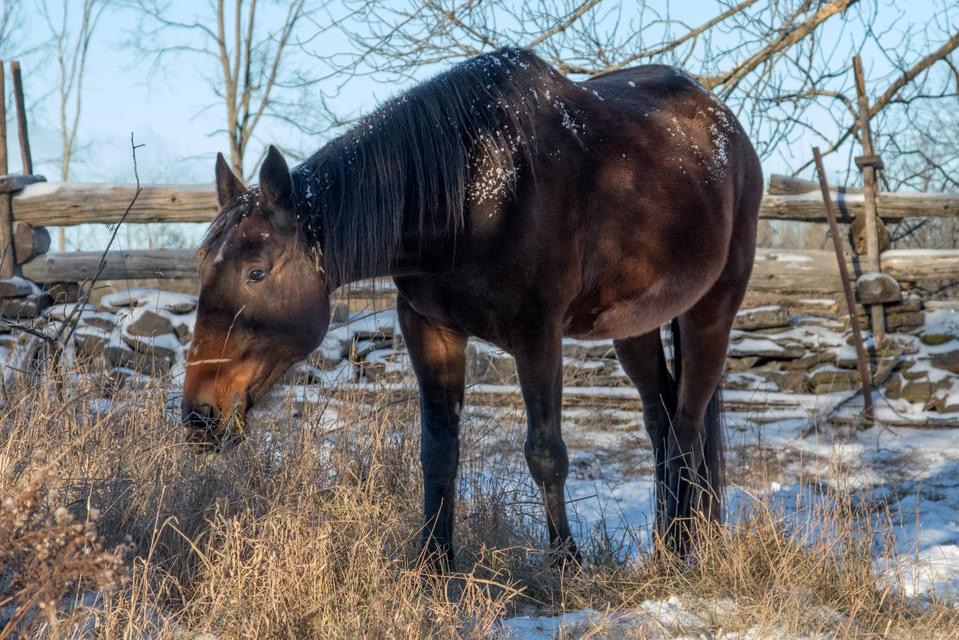
“There is something about the outside of a horse that is good for the inside of a man.”
Winston Churchill
“A horse doesn’t care how much you know until he knows how much you care.”
Pat Parelli
What Can We Do?
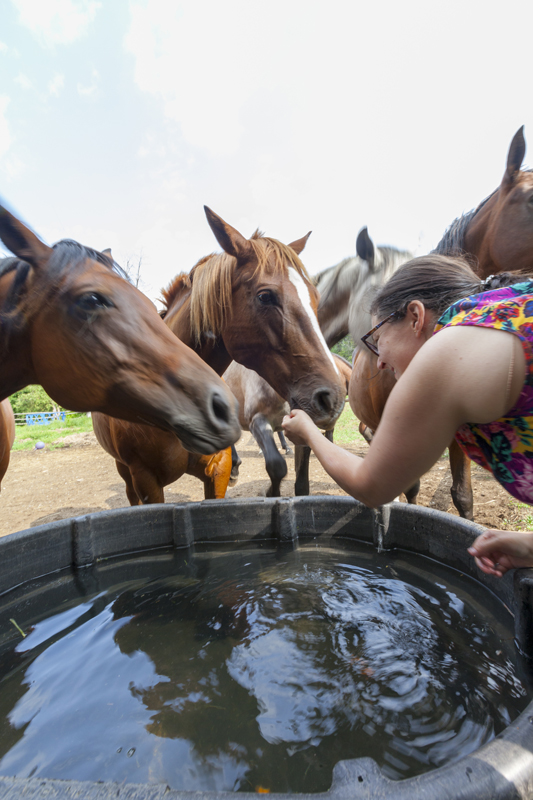
The plight of unwanted horses is something we must face head-on. Awareness is key. We need to encourage responsible horse ownership, support rescue organizations, and advocate for stronger regulations surrounding the care and welfare of horses.
Supporting local rescues, donating to equine welfare initiatives, and adopting rescue horses are all ways we can help. As horse lovers and advocates, we have a responsibility to protect these incredible creatures—not just when they are useful to us, but throughout their entire lives. Whether through volunteering, donating, or simply spreading awareness, we can each play a part in changing the narrative for horses in need.
“At its finest, rider and horse are joined not by tack, but by trust. Each is totally reliant upon the other. Each is the selfless guardian of the other’s well-being.”
– Unknown Author