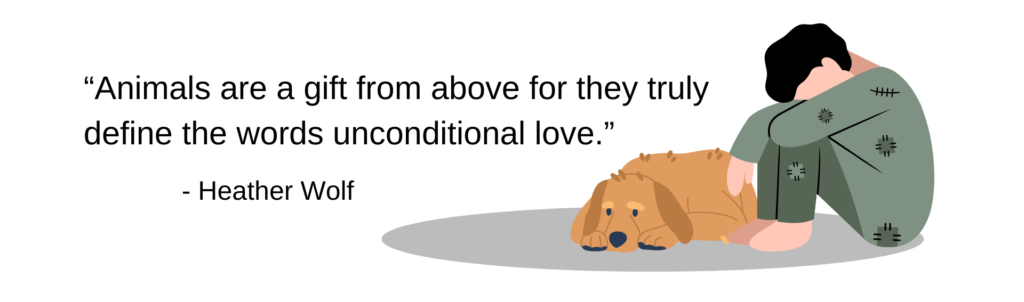
In a society where pets often evoke more compassion than people, it’s time we take a closer look at how this plays out—especially for those living in poverty or without housing.
The term speciesism describes the tendency to value certain species over others. But a similar hierarchy exists among humans—especially when it comes to how we treat people experiencing poverty. This disparity becomes particularly evident when comparing how society responds to people versus their pets. Many youth living on the street have noticed that passersby are more generous and kind when they think the person is asking for help for their dog, not for themselves (Matheson & Pranschke, 2022). Some people even offer to buy a dog from its unhoused owner, claiming they could give it a “better life”—as if love and care are only possible within four walls. Sadly, this stigma is reinforced not just by the public, but sometimes by law enforcement (Aliment et al., 2016).

Pet Ownership Among the Homeless in Canada
In Canada, about 35,000 people experience homelessness, and 8% to 19% of them own pets. Despite assumptions, research from the University of Guelph shows these animals are often in excellent health, sometimes better than those in housed environments.
For their guardians, pets offer companionship, emotional stability, and even physical safety—especially for women, older adults, and those in unsafe living conditions (Cleary et al., 2020). The benefits are significant: lower stress, improved mental health, and increased social connection. Likewise, animals benefit from consistent companionship and reduced risks of abandonment, injury, or neglect, regardless of their guardian’s housing status.
At the same time, this deep human-animal bond can complicate difficult decisions. For example, for women fleeing domestic violence, the lack of pet-friendly shelters is a major barrier.
71% of women report their abuser threatened or harmed a pet, and up to 40% choose to stay rather than leave their animals behind (National Coalition Against Domestic Violence, n.d.).
Pet owners experiencing precarious housing situations often go to great lengths to care for their animals. A 2023 PetSmart Charities of Canada survey found that 77% of Canadian pet owners would skip meals to feed their pets during tough times. Among homeless youth, the mindset of “pet before self” can even lead to avoiding drugs, alcohol, or risky behavior to ensure their pet’s well-being (Lem et al., 2013). Indeed, losing a pet under these conditions can be devastating. Pets are not just companions—they’re a lifeline.
Toward a More Humane Future
Many bylaws and housing policies unintentionally punish pet owners living in poverty. These rules often reflect assumptions about what “proper” pet care looks like—assumptions based on housed lifestyles. Yet studies show that pets of unhoused people often receive more consistent care and attention than many household pets (Williams & Hogg, 2016).
Supporting people in keeping their pets isn’t just compassionate—it’s practical. Programs that keep humans and animals together can reduce shelter intake, improve health outcomes, and support recovery (Cleary et al., 2020).
There’s a growing movement toward a One Health approach, recognizing that human, animal, and environmental health are all connected. This model promotes coordinated services—from vet care to housing support—to help both people and pets thrive.
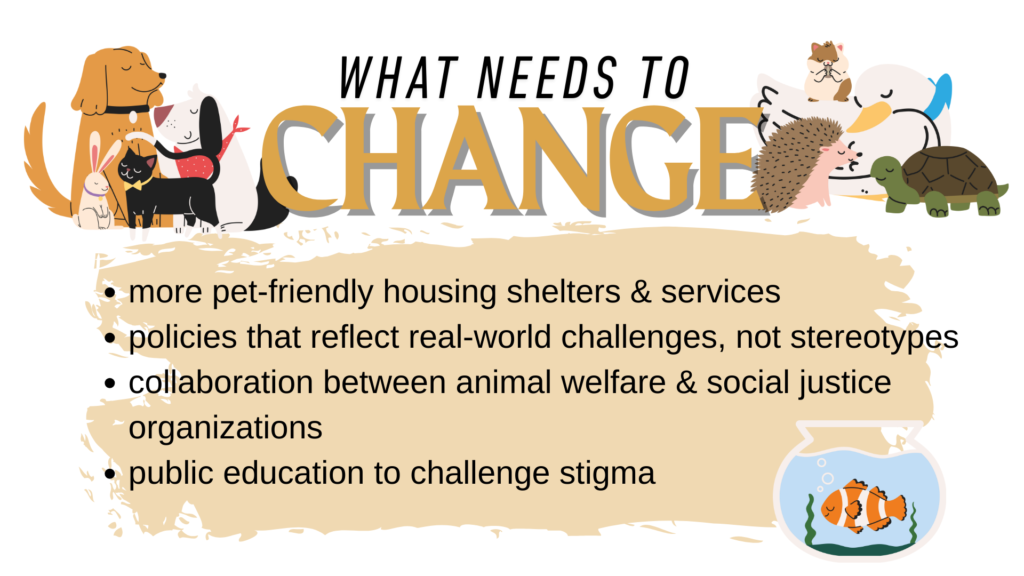
If we care about animal welfare, we must also care about the humans who love them—especially those most marginalized. The human-animal bond is powerful. It deserves our protection, not our judgment.